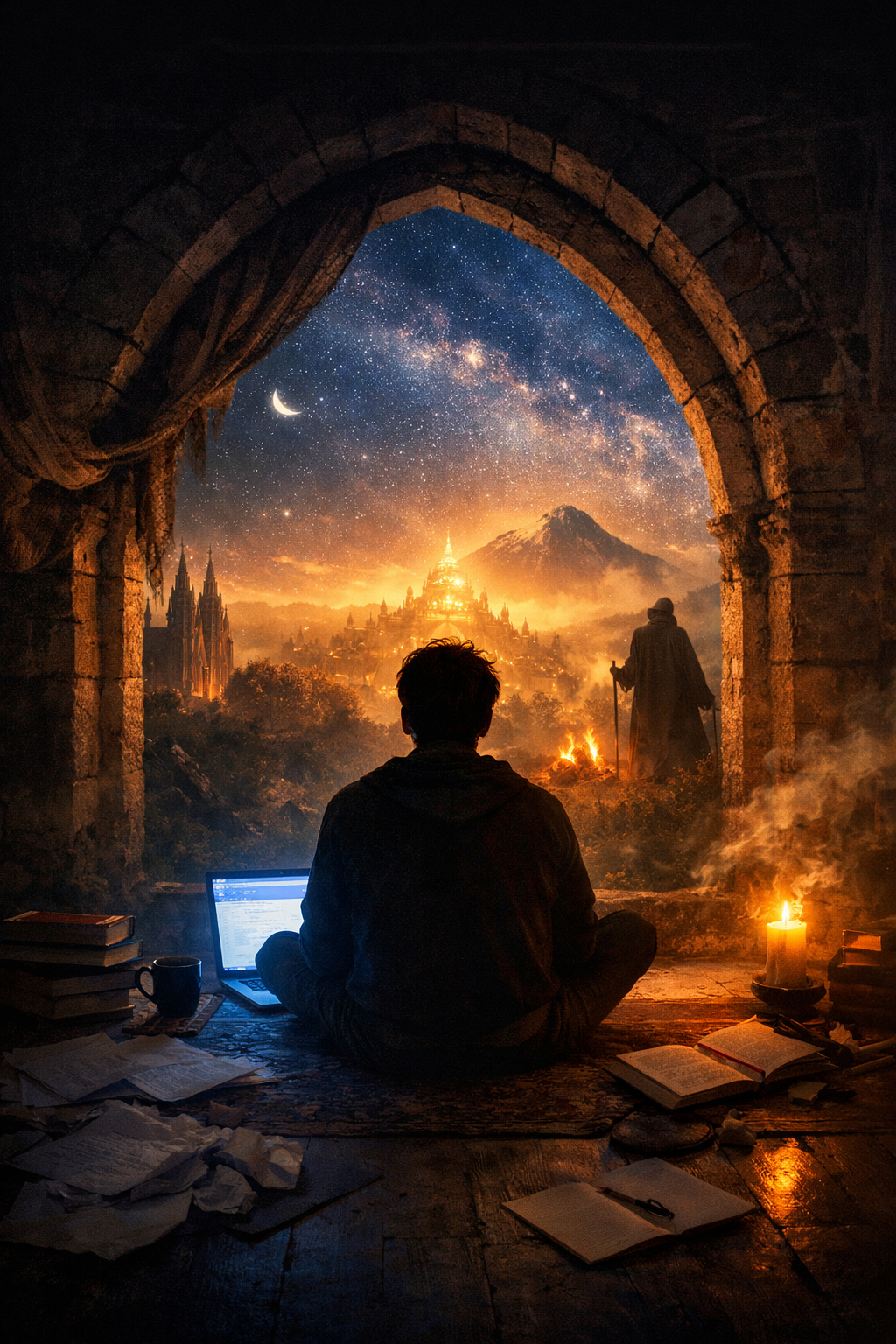
You know the feeling. It’s 3 AM. The screen’s glow is the only light. You’ve scrolled through subreddits on spiritual awakening, read articles on psychedelic integration, and dug into forums on modern mysticism. There’s a hollow quiet. A metallic taste in your mouth, like you’ve been consuming information, not wisdom. You are the most spiritually informed seeker in history. And you are profoundly, quietly adrift.
You’re not lost. You’re un-moored. You have the knife of deconstruction, but no star to steer by. This is the modern spiritual crisis: a homesickness for a home you’ve never seen.
What if the map you need wasn’t written by a self-help guru, but by 20th-century sages who charted the very dangers you’re flirting with? Men who provided not just philosophy, but a living path out of the maze.
The Warning Every Modern Seeker Needs to Hear
Let’s start where many are: exploring consciousness through psychedelics or the occult. It feels like the ultimate frontier.
Charles Upton is the guide who meets you there with a vital warning. He reframes the conversation. That “other realm” you access isn’t just brain chemistry. In traditions like Sufism, it’s called the ‘alam al-mithal—the Imaginal World. It’s a real plane of psychic forms and autonomous intelligences.
Modernity has demolished the guardrails. To enter without a guide from a living spiritual tradition is spiritual vagrancy. You’re not finding God; you’re offering yourself to the first compelling whisper in the dark. This explains the haunting “comedown”—the anxiety, the sense of a presence that overstays. Upton’s work, like The System of Antichrist, is the sober truth: you don’t need another trip. You need a lighthouse.
The Compass: The Perennial Philosophy
So where do you turn? The watery “all paths are the same” philosophy leaves you starving.
Enter Frithjof Schuon and the Perennial Philosophy. This isn’t relativism. It’s cosmic architecture. Imagine one blinding Sun (the Divine Absolute). The human eye can’t bear it, so Divine Mercy provides prisms: the great world religions.
Each religion—Hinduism, Buddhism, Judaism, Christianity, Islam—is a unique prism, refracting the white light into a spectrum a specific humanity can bear. The colors differ, but the light-source is one.
Your search isn’t about collecting pretty rocks (eclectic practices). It’s about finding the prism that fits your soul and following its light back to the Source. This demands depth over breadth. It’s why the realized Sufi saint and the Christian mystic share a wordless awe, not a doctrine.
Proof It’s Real: When Wisdom Has a Human Face
But does this produce real human beings, or just more philosophers? Martin Lings, a Cambridge scholar and Sufi, is the answer.
His book A Return to the Spirit offers a devastating diagnosis: modernity is spiritual amputation. We’ve severed ourselves from the Divine Vine. We’re a decorated, dying branch. The cure is re-attachment.
Lings doesn’t just argue. In his biography of a Sufi saint, doctrine becomes a handshake. You meet a man whose presence was a fragrance—of rosewater, old books, and a peace so tangible it slowed hearts. Holiness has a human face. It laughs, drinks tea, and exists. This is the proof your seeking heart craves.
How to See the Sacred World Again
But how does this touch our daily, mundane world?
Titus Burckhardt, master of sacred art and traditional cosmology, gives you new eyes. He teaches that a Gothic cathedral isn’t just art. Its nave is the soul’s journey; its rose window is the explosion of consciousness in Divine Light. Builders were scientists of the spirit.
An Islamic geometric pattern is a visual mantra of God’s unity. A Hindu temple’s proportions model the cosmos. These are spiritual technologies for realigning the heart. After Burckhardt, the world is no longer dead matter. It’s a sacred text written in stone and color. Your daily commute happens inside a living cathedral.
The Missing Link: Spiritual Transmission
You might now have the map. But the heart whispers: How do I walk?
The answer is transmission—the living chain of grace, heart to heart, across time. It’s the bridge between theory and being.
A modern record of this is The School of Celestial Fire, which chronicles Shaykh Abdullah Sirr-Dan al-Jamal, a Western Sufi master in London. The book captures not his lectures, but the weather around him—a palpable silence, a grace (barakah) that settled frantic minds. This is transformative proximity. The teacher’s final lesson is his departure, forcing you to discover the true guide was always the ember in your own chest.
Your Real Search Begins Now
So here you are. The screen’s glow remains, but the air has changed.
That metallic taste? It’s the flavor of a search orbiting a drain. The chill? It’s the absence of a fire you were born to stand beside.
The works of Upton, Schuon, Lings, and Burckhardt aren’t more content for your library. They are the receipt for a purchase your soul already made. Your 3 AM hunger isn’t for more data. It’s for your Origin.
The next step isn’t another search query. It’s the courage to close the tabs. To sit in the charged silence. To listen.
That faint crackle on the edge of quiet?
It’s not your imagination.
It’s the sound of an ancient flame, waiting for you to finally come home.
Where to Start Your Real Journey:
- Begin with Martin Lings’ A Return to the Spirit for the diagnosis and living proof.
- Dive into Frithjof Schuon’s The Transcendent Unity of Religions for the map.
- See the world anew with Titus Burckhardt’s Sacred Art in East and West.
- Heed Charles Upton’s crucial warnings in The System of Antichrist.
- Witness transmission in The School of Celestial Fire.
This is the end of seeking. And the beginning of finding.